Logistics Guides

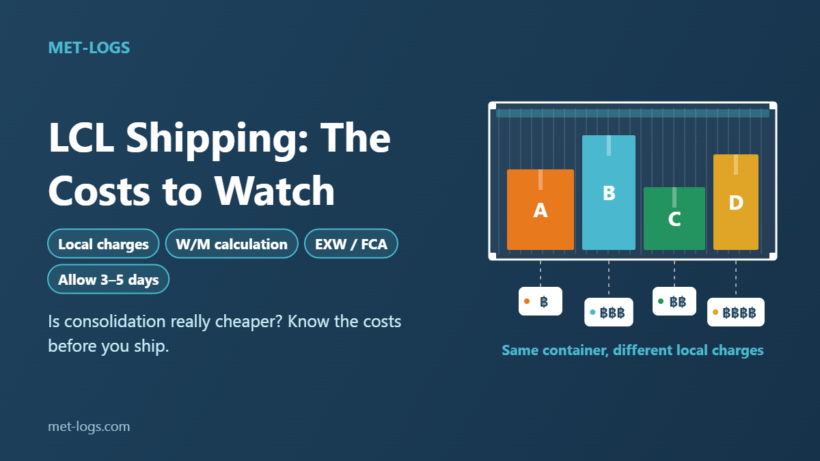
LCL shipping costs to watch: same container, different local charges
Logistics Guides

LCL Shipping Costs to Watch: Local Charges, W/M Calculation and Devanning Time in Thailand

LCL (Less than Container Load) shipping lets businesses move small volumes by sea without paying for a whole container. You pay for the space your cargo actually uses. Even so, many importers and exporters run into two surprises: a destination bill far higher than expected, and cargo that cannot be
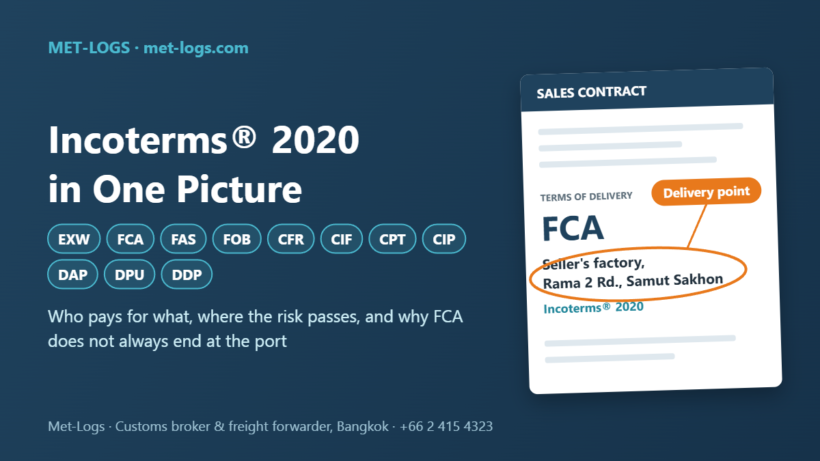
Incoterms 2020 in one picture: EXW, FCA, FAS, FOB, CFR, CIF, CPT, CIP, DAP, DPU, DDP
Logistics Guides

Incoterms® 2020 Explained: All 11 Rules, Who Pays for What and Where Risk Passes

FOB, CIF and EXW turn up on almost every international quotation, but they are often written as three letters with no place attached. Then the buyer and seller each assume something different about who pays for the truck, who pays the terminal charges and who carries the loss if the

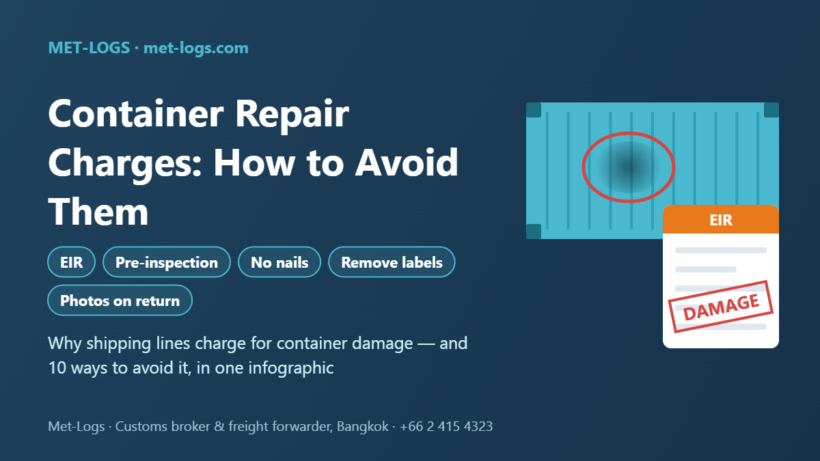
Container repair charges: EIR, pre-inspection, no nails, remove labels, photos on return
Logistics Guides

Container Repair Charges: Why Shipping Lines Charge for Damage and 10 Ways to Avoid Them

Weeks after an empty container has gone back to the depot, many importers and exporters receive a container repair bill from the shipping line — or find the charge deducted from their container deposit — with no idea when the damage happened. This guide explains how repair charges arise, who

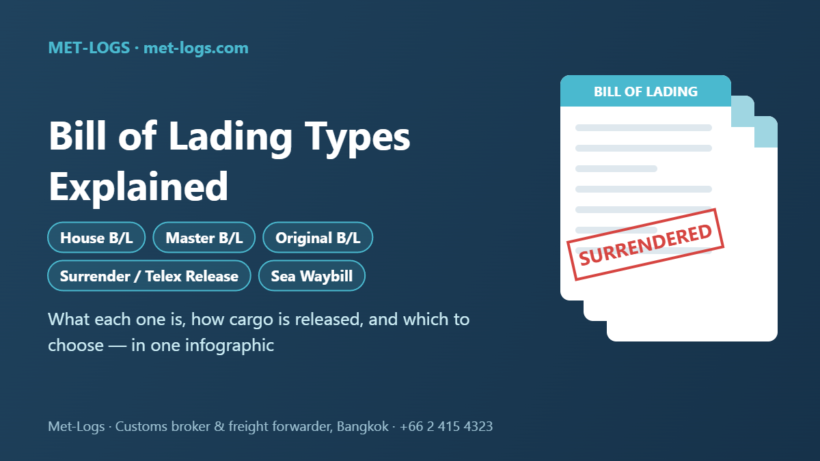
Bill of Lading Types Explained: House B/L, Master B/L, Original B/L, Surrender / Telex Release, Sea Waybill
Logistics Guides

Bill of Lading Types Explained: House vs Master B/L, Original vs Surrender (Telex Release) vs Sea Waybill

Every ocean shipment moves on a bill of lading (B/L), yet the many names around it — House B/L, Master B/L, Original B/L, Surrender B/L, Telex Release, Sea Waybill — confuse even experienced traders. This guide explains the difference in one picture, with a comparison table and a simple rule